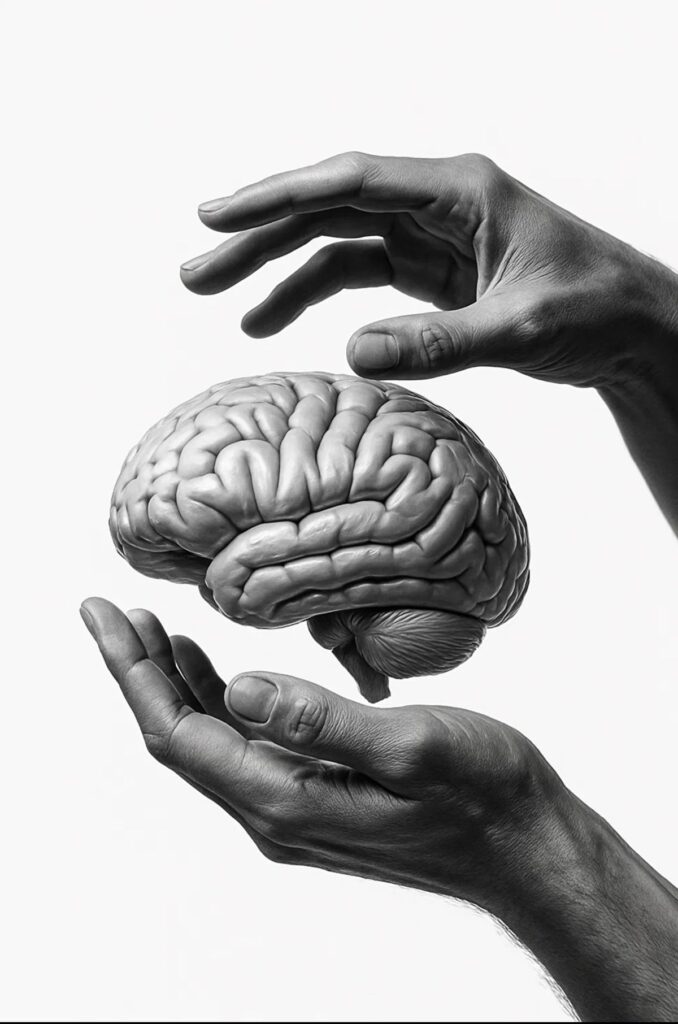


The “Beautiful is Good” Bias
In the 1920s, psychologist Edward Thorndike noticed something strange in military evaluations. He found that if an officer was rated highly in one physical category—like “neatness” or “posture”—they were almost always rated highly in unrelated leadership categories like “loyalty” and “intelligence.”
Thorndike called this the Halo Effect.
It is a cognitive bias where our overall impression of a person (or a brand) influences how we feel about their specific character traits. In simple terms: if we think a brand looks “good,” our brain automatically assumes that its products work “well,” its customer service is “friendly,” and its values are “honest.”
The Visual Shortcut to Trust
The human brain is constantly looking for ways to save energy. Evaluating the technical specifications of a laptop or the ingredient list of a skincare serum takes a lot of mental work.
To bypass this, the brain uses the Aesthetic-Usability Effect.
Research has shown that users perceive more attractive products as being easier to use than less attractive ones—even when they are functionally identical.
- Apple doesn’t just sell computers; they sell the “Halo” of minimalist design. Because the hardware is beautiful, we assume the software must be intuitive.
- A high-end restaurant with heavy linen napkins and gold-foiled menus triggers a Halo. We assume the kitchen is clean and the chef is world-class before we ever taste the food.
Why the Halo Effect is a Double-Edged Sword
While the Halo can lift your brand, it can also lead to a “Reverse Halo” (or the Horn Effect).
If a single part of your brand experience is “ugly” or “broken,” the brain spreads that negativity to everything else.
- A slow-loading website makes people think your physical shipping will be slow.
- A typo in a professional proposal makes a client think your accounting or engineering will be sloppy.
- A disorganized social media feed makes a customer think your product quality is declining.
The brain doesn’t see these as isolated incidents; it sees them as a “symptom” of a deeper, systemic failure.
How to Use the Halo Effect in Marketing & Sales
To leverage this bias, you don’t need to be perfect at everything—you just need to be exceptionally good at the first thing people see.
1. Invest in the “Point of Entry”
If you are a consultant, your headshot and your LinkedIn banner are your Halo. If you are an e-commerce store, your product photography is your Halo. These high-level visual cues set the standard. If the photography is elite, the brain assumes the product quality is elite.
2. The Power of Association
You can “borrow” a Halo through association. This is why brands use celebrity endorsements. By putting a well-liked athlete next to a sports drink, the brand absorbs the athlete’s “Halo” of health, strength, and success.
3. Focus on One “Hero” Feature
Don’t try to be the cheapest, fastest, and most durable all at once. Pick one area to be world-class in. If you are known for having the “best customer support in the industry,” that positive reputation will create a Halo that protects your brand even if your prices are a bit higher than the competition.
The Psychology of “Premium”
Why does a “Luxury” brand feel different? It isn’t just the price tag; it’s the consistency of the Halo.
From the weight of the shopping bag to the scent of the retail store, every sensory detail is designed to reinforce a single idea: “This is high-value.”
When the brain is surrounded by signals of quality, it stops looking for flaws. It becomes “loyal” to the feeling the brand provides.
The Bottom Line
People do not judge your brand based on an objective analysis of your data. They judge you based on the “glow” your brand gives off.
By cleaning up your visual identity and ensuring that your first touchpoint is high-quality, you aren’t just “decorating”—you are building a psychological shield that increases perceived value and builds long-term trust.